
Traditional SEO vs Generative Engine Optimization: What's Different?
Explore the differences between traditional SEO content and generative engine optimization to determine your focus strategy.
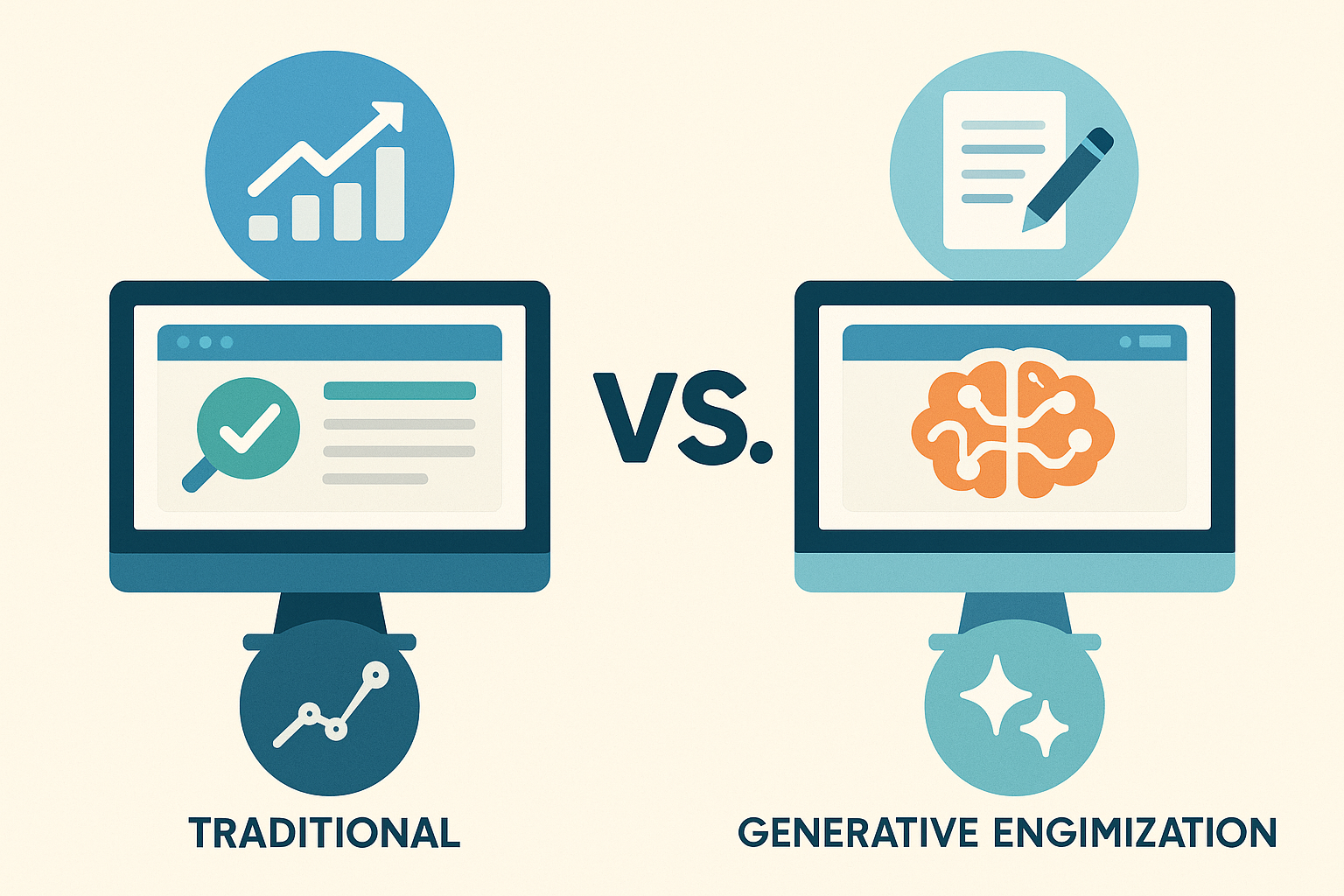
Understanding the nuances between traditional SEO content and generative engine optimization (GEO) is crucial for anyone looking to enhance their digital presence. In essence, traditional SEO focuses on optimizing content for search engines like Google, while generative engine optimization applies AI-driven techniques to enhance content visibility and relevance in a rapidly changing digital landscape.
What is Traditional SEO?
Traditional SEO involves a set of best practices designed to improve visibility and rankings on search engine results pages (SERPs). This method relies heavily on optimizing web pages for specific keywords, enhancing site structure, and acquiring backlinks to increase domain authority.
According to a report by HubSpot, 75% of users never scroll past the first page of search results. This highlights the importance of ranking well through traditional methods. Elements of traditional SEO include:
- Keyword Research: Identifying relevant terms and phrases that potential customers are searching for.
- On-page SEO: Optimizing title tags, meta descriptions, headers, and content to align with targeted keywords.
- Off-page SEO: Building backlinks to signal authority and relevance to search engines.
- Technical SEO: Ensuring the website is technically efficient, including site speed, mobile-friendliness, and structured data.
What is Generative Engine Optimization?
Generative Engine Optimization, on the other hand, utilizes AI technologies to dynamically create and optimize content. This method not only focuses on keywords but also enhances user engagement through personalization and improved content delivery. As defined by industry leaders, generative optimization leverages machine learning algorithms to analyze user behavior and preferences.
A notable statistic by Forrester indicates that companies leveraging AI achieve 30% greater marketing efficiency than those who do not. Generative approaches involve:
- AI-Driven Content Creation: Using algorithms to generate content that meets specific user needs.
- Personalization: Customizing content based on user data to enhance engagement.
- Predictive Analytics: Analyzing data to forecast trends and adapt strategies accordingly.
Key Differences Between Traditional SEO and Generative Engine Optimization
While both traditional SEO and GEO aim to improve online visibility, they differ markedly in their methodologies and tools used:
- Content Creation: Traditional SEO often relies on manual content crafting, whereas GEO can automate this process using AI algorithms.
- Keyword Focus: Traditional SEO emphasizes keyword density and placement, while GEO adapts content to context and user intent.
- User Engagement: GEO focuses on creating engaging and interactive content, whereas traditional SEO may not prioritize user experience as effectively.
- Scalability: AI-driven approaches allow for scaling content production without compromising quality, a challenge often faced in traditional SEO efforts.
Which One Should You Focus On First?
Deciding whether to concentrate on traditional SEO or generative engine optimization depends on your current digital strategy and business goals. If you're just starting, traditional SEO might be more accessible. It lays a foundation that can significantly boost your online presence. However, as your content evolves, incorporating generative engine optimization can provide a competitive edge.
For instance, beGEO is committed to helping businesses discover the right balance between these approaches. By integrating both methods, you can ensure comprehensive coverage of SEO strategies that are effective and future-proof.
Conclusion
In the ever-changing world of digital marketing, both traditional SEO and generative engine optimization have their places. You can create a robust digital presence by understanding the strengths and weaknesses of each approach. Remember to advocate for a fluid strategy that incorporates both methods for the best results.
Related reading
Frequently asked
Both are important; traditional SEO is critical for foundational visibility, while generative engine optimization enhances engagement and adaptability to user needs.
No, AI cannot fully replace traditional SEO strategies. Instead, it can enhance them through automation and improved content delivery techniques.
Start by using AI tools for content creation and user data analysis to tailor your strategy based on engagement metrics.